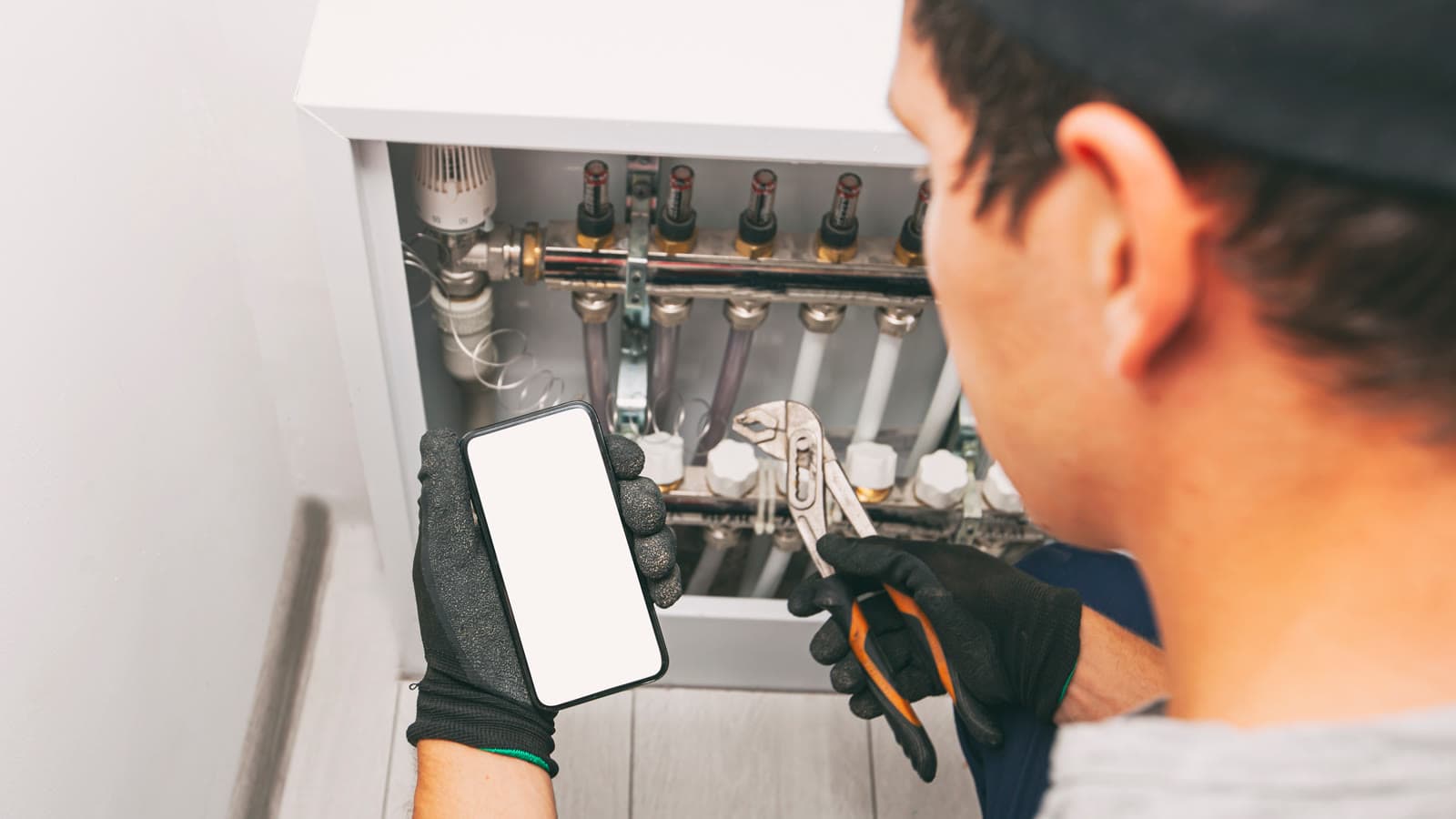
Six in the morning. On the round, an operator notices a seal leaking on a pump. It is a good catch: early, before the leak becomes a failure.
Then the finding goes on its journey. It becomes a note on the round sheet, then a mention to the shift supervisor, then an email, then a phone call to the maintenance desk. Hours later, someone types up a work order. It says "pump leaking". It has no photo, no clear asset tag, no reading and no procedure. The technician who picks it up walks out to find the right pump and starts the diagnosis again from scratch.
The inspection worked. Everything after it did not. We made a 46-second video of exactly this story, From finding to fix, and this post looks at why it happens so often and what to change.
The finding was never the hard part
Most plants are good at noticing problems. Operators know their equipment, inspectors know what to look for, and the checklists are usually reasonable. What fails is the path from the observation to the repair, a path that typically crosses three or four people and two or three systems before any work is planned.
Every one of those handoffs loses something. The location gets vaguer, the description gets shorter, the urgency gets reinterpreted, and the evidence, the photo or the reading, rarely survives at all. By the time the finding becomes work, it is a weaker version of what the operator actually saw.
Where findings stall
Trace a handful of last month's findings from round to repair and the same stall points tend to appear:
- Capture without context. "Leak at pump near the east wall" is not an asset. If a finding is not tied to a specific piece of equipment when it is recorded, someone has to work out which one later, and it may not be the right one.
- The relay. The operator tells the supervisor, the supervisor tells the planner, the planner types the work order. Each step is a retyping, and each retyping is a chance to shorten, delay or drop the finding.
- Triage nobody owns. Is it urgent? Can it wait for the next shutdown? If nobody is clearly responsible for that decision, the finding waits for whoever is least busy.
- Work orders that lose the evidence. The photo stays on someone's phone and the reading stays on the round sheet. The technician starts without either.
- Closure that goes nowhere. The repair is done, but the operator never hears about it and the asset's history never records it. The next time the seal leaks, nobody can tell it is the third time this year.
What a good finding carries
A finding that is easy to act on answers the questions the technician would otherwise have to ask:
- Which asset, unambiguously, by tag or by the record it was captured against.
- What was seen, in a sentence, with a photo.
- The reading and its limit, if a measurement was involved.
- When, and by whom, so there is someone to ask.
- The operator's sense of severity, which is not the final word on priority but is valuable context.
None of this takes long to record if it is captured at the equipment, at the moment the problem is noticed. All of it is hard to reconstruct three hours later at a desk.
Make the work order a consequence, not a separate task
The most effective fix is structural. If the finding is recorded against the asset during the inspection, the work order can be created from it directly, inheriting the asset, the description, the photo and the reading, instead of being written as a separate document by someone who was not there.
That is how the workflow runs in Vardian. The operator marks the check as failed and adds a photo at the equipment. A work order is created from the inspection, linked to the asset, its history and the right procedure. The technician picks it up on their phone, follows the steps and signs off, and the repair becomes part of the asset's history, where the next operator on the round can see it. You can see how this fits into planned work on our maintenance solution page.
Not every finding needs a work order immediately. Some belong on a watch list, some can be grouped into the next planned shutdown, and some turn out to be nothing. The important part is that the decision is made deliberately and recorded, rather than made by default when the note gets lost.
Measure the gap
You cannot improve a gap you cannot see. A few measures make the path from finding to fix visible, and none of them need a new system to start:
- Time from finding to work order. How long does an abnormality wait before it becomes planned work?
- Findings without an outcome. How many abnormal findings from last month have no work order, no watch-list entry and no recorded decision?
- Repeat findings. Which assets produce the same finding round after round?
- Feedback to the reporter. Do operators hear what happened to what they reported?
The first time most teams measure these, the numbers are uncomfortable. That is the point. The gap was always there; now it has a size.
Where to start next week
Take five abnormal findings from last month's rounds or inspections and trace each one to its outcome. For every finding, note where it was recorded, how many times it was retyped, how long it took to become work and whether the operator ever heard back. Then fix the single biggest stall point first: usually capturing findings against the asset, or letting the work order be created straight from the inspection.
If your inspections still run on paper, our free inspection checklists are a practical starting point, and our guide to operator rounds covers what to check and how often. When you are ready to connect findings to work directly, see how digital workflows work in Vardian.
See it with one of your own workflows
Bring a round, an inspection or a maintenance process to a demo, and we'll show how it runs in Vardian.
Book a demo